Mike
The Art of Racing in the RainMike is Denny’s friend and co-worker, a steady presence whose loyalty is shown less through grand declarations than through practical help at moments when Denny’s family life is under strain. He works with Denny behind the counter at a shop, where their role is called “Customer relations,” and repeatedly steps into the ordinary tasks that become consequential when illness, loss, and legal trouble narrow Denny’s choices. His friendship culminates in an embrace that lets Denny finally release years of accumulated grief.
Identity and Background
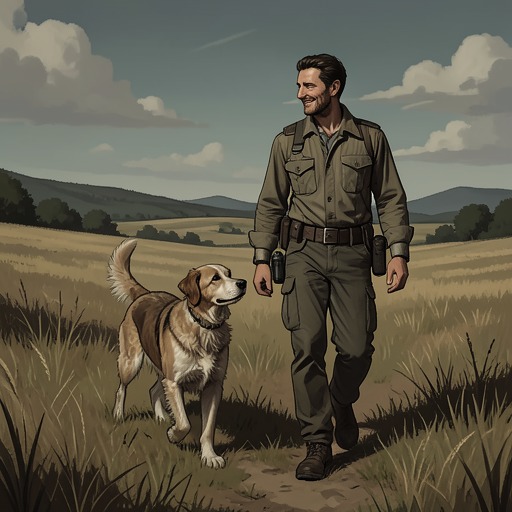
Mike works with Denny at the shop, behind the counter. Enzo’s description emphasizes his small stature and his hands: friendly, pink, and always washed clean of smell. The detail comes through a dog’s sharply physical way of noticing people, but it also establishes Mike as someone familiar within Denny’s daily world. Their connection is not introduced as a formal arrangement; it is already close enough that Denny can call on him when an urgent family responsibility conflicts with work.
The novel gives Mike no separate history or account of his life beyond his friendship with Denny and his connection to Tony. Instead, it defines him through repeated acts of assistance. That limited portrait makes the acts themselves significant: Mike is available when Denny needs cover, help with Enzo, or someone to stand beside him, while the narrative registers not only what he does but also the limits of what he can do.
Practical Help During Eve’s Illness
When Enzo’s worsening hip pain leads Denny to arrange another veterinary visit, Denny phones Mike and asks him to cover the next day’s shift. The request is part of a wider pattern of care and strain: Enzo has been taken to the vet repeatedly for medicines intended to make him more comfortable, while Denny is also managing the demands of Eve’s illness and the family’s daily needs. Mike’s willingness to cover the shift gives Denny room to attend to Enzo without abandoning his work obligations.
During Eve’s hospitalization, Denny’s days become highly regimented. He takes Zoë to summer camp, works, collects her, makes dinner, and brings her to visit Eve, while also managing Enzo and household responsibilities. The account stresses how little time or attention remains for the dog; Denny has chosen to put Eve’s care first. Against that backdrop, Mike’s help with a more immediate practical need carries weight. When Denny is at the hospital, Mike arrives in a well-kept 1974 Alfa Romeo GTV, pine green with a fabric sunroof. He approaches Denny, who thanks him. The car is a distinctive detail, but the scene’s focus is the visit: Mike comes to the hospital parking lot while Denny waits through a period of profound uncertainty.
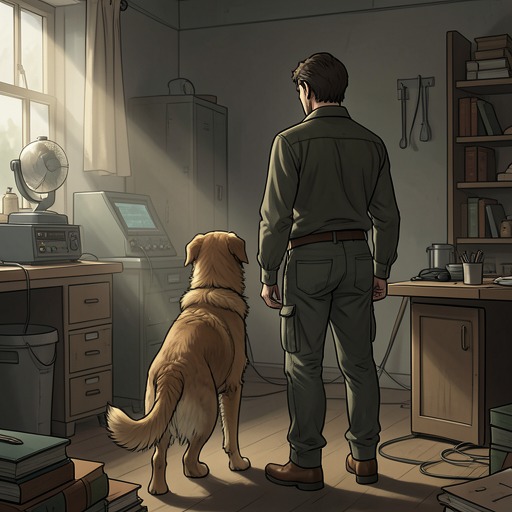
Denny also asks Mike to stop at his home and collect Enzo’s things. His instructions are specific: the food is in the pantry; Enzo gets a cup and a half, three chicken cookies before bed, his bed from the bedroom, and his stuffed dog. Mike is told how to prompt Enzo to find the toy if it is hidden. This exchange makes the trust between the men concrete. Denny is not merely asking a friend to check in; he is handing over the details of Enzo’s care, including the small routines that help the dog feel secure.
Friendship Under Pressure
After Eve dies, Mike remains part of the practical network around Denny. When Denny is arrested and asks how he can collect his daughter, Mike offers to pick Zoë up. The offer cannot solve the problem: Mike is not on the list of people approved to collect her. The moment therefore shows both the reach and the limits of friendship when official arrangements control access. Mike is ready to help, but willingness alone cannot override the restriction.
Later, Mike and Tony bring Enzo home. Denny is waiting on the dark porch with his hands in his pockets and says that Mark has told him not to discuss the matter. Mike’s presence in the scene places him alongside the people trying to stay connected to Denny even when he will not, or cannot, talk. The narrative has already shown Denny hiding his shaking hands in his pockets after Eve’s death; here, that guarded posture remains, and Mike’s role is to arrive rather than demand an explanation.
Mike’s support becomes more explicit when Denny sits with a manila folder at Mike and Tony’s kitchen table. Tony is absent, and Mike paces nervously. He tells Denny that the decision is the right one and that he supports him. Denny does not answer, but stares at the folder. The scene frames Mike’s reassurance as an attempt to steady a friend who appears emotionally depleted, while leaving the precise contents of the folder unstated in this moment. His nervous pacing suggests that the decision matters to him too, even though Denny is the one who must face it.
Loss, Loyalty, and Release
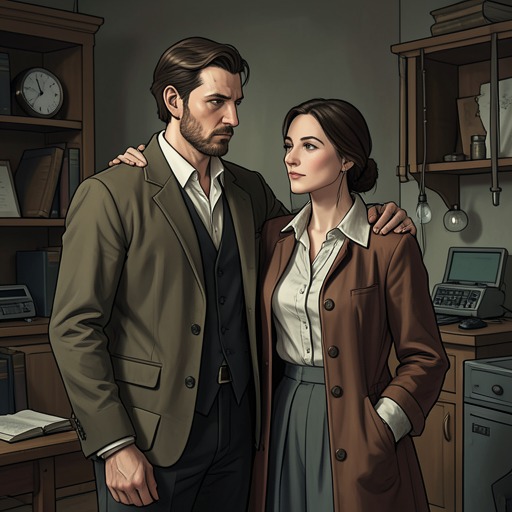
When the charges against Denny are dropped, Mike’s response changes the emotional temperature of the moment. Denny says he is free, but the words do not contain what follows: Mike wraps him in a hug, and Denny breaks down, crying through the grief and pressure he has held back. The narrative presents Mike’s embrace not as a solution to what Denny has endured but as the immediate human contact that allows the restraint to give way. The legal outcome is explained by Mr. Lawrence, who says the case had no physical evidence and that Annika’s testimony collapsed under questioning; Mike’s part is different. He receives Denny’s grief without trying to argue it away.
Across these episodes, Mike’s friendship is defined by a sequence of useful, bounded acts: taking a shift, helping care for Enzo, offering to collect Zoë, showing up with Tony, and standing beside Denny when a decision weighs on him. Some offers meet institutional limits, and some visits meet Denny’s silence. Yet Mike continues to be present. The final embrace gives that pattern its clearest expression: in a story where care often takes the form of repeated daily work, Mike’s loyalty appears as readiness to help—and, when help cannot undo the past, readiness to hold his friend.